Tuesday, April 22, 2014

Why is it so hard for some people to believe in God?

Some nonbelievers will say that science has all but disproved religion. 

I am always fascinated by those who believe that the “big bang” tells us everything we need to know about creation. They adamantly insist that all creation can be explained by this burst of energy. And yet, it seems to me that the “big bang” theory is itself the clearest clue of all that the entire universe - including matter and energy - is completely conditional on an outside force. The idea that the universe created itself is beyond scientific proof and completely illogical. It is only logical that whatever started the universe was not subject to the same laws as the universe. Something … or someone … would seemly have to begin the “big bang.”

Of course ardent anti-God people would say that this is nonsense, that science gives no evidence of God's existence. Which is in fact a truth we can all agree on. Science deals with realities and relationships within the world … and the Creator, by definition, is not an ingredient in the world he made. So we can agree that science can give no empirical evidence of God’s existence. But … this is not the real question. The real question is whether all reality is restricted to what the empirical sciences can measure. Some would say that science alone deals with reality. However the truth is that this statement in itself is a contradiction; because it is scientifically unprovable. How can one prove that reality is restricted to what the empirical sciences can measure? No one can prove that! To say that science alone deals with reality is in and of itself an unscientific observation.

Other nonbelievers will point to the fact that so many awful things have been done in the name of religion.

People struggling with the question of God often comment on all the horrors inflicted on the world by religious people. They say that in the name of God many moral outrages have been inflicted on the human race, such as: the Crusades, the Inquisition, witch hunts, support of slavery and most recently, the clerical sex abuse scandal? This line of thinking seems to allow many to merely dismiss religion rather than prove false any religious argument. But the truth is that the existence of bad Catholics does not in itself demonstrate that Catholicism is a bad thing, anymore than unethical scientists prove that all scientists are unethical. Good science was used to produce nuclear weapons. Does that mean that all scientists are evil? Of course not! In its humanity the Church is easily broken. The failings of people in the Church does not undermine the Churches claim to speak the truth.

The Bible presents some who are opposed to God with another avenue of attack. They say:  "How you can account for the obvious contradictions and bizarre stories in the bible? It hardly seems a cohesive proof for the existence of God." 

The truth is that the bible is a group of books gathered together from thousands of years of literary and social environments. To read it and judge it without an educated understanding of this is in itself an irrational act. Clearly the bible is made up of texts from a wide variety of genres and written at different times for varying audiences. Without studying the great minds of the Church, like, Irenaeus, Origen and Augustine (to name just a few) all of whom dealt with the complexity of the Bible ... one is merely speaking in unqualified generalizations about something of which they know very little. 

The truth is that one must study the entire Bible in the light of Christ crucified and risen from the dead. All of the bible must be read with the filter of Christ who took on himself the sins of the world and brought forgiveness and love to us all. Without this filter it doesn’t make much sense. The Old Testament tells us about man’s struggle against sin. And the New Testament, all the way to the image of the slain lamb in the Book of Revelation, is a story about salvation history. The peaceful Christ, who took upon himself the sin of the world and returned in forgiving love, is the interpretive key to the Bible; only in that light does it all make sense.

Proving God … proving the divinity of Christ … proving the Resurrection … is not the point. Experiencing God … in the imitation of Christ … and embracing the hope of one’s own resurrection is the point. God is love. And the more connected to others one becomes … in love … the more obvious God will become.


How does religion make sense?
Only in loving as Christ loved us …
to intellectualize is a dead-end street.


x

Tuesday, April 8, 2014

Reflection - The Cross


One of the most poignant scenes in the movie Passion of the Christ is when Jesus is handed his cross and he embraces it.   Clearly the cross was Jesus’ reason for living a human life.
The cross for Jesus was his instrument for the healing and transformation of human history.  Who would ever look for a savior on a cross – an instrument of humiliation, torture and defeat?  Why would we look for God in something so painful, tragic and immoral?  How can something so awful be the high point in human history?  But there it is …  a total paradox … this way of Christ.
The cross is the doorway to resurrection.  The pain and sorrow of Good Friday lead to the joy of Easter Sunday.  Pain and glory all wrapped up in some mysterious and glorious dance; a dance that Jesus invites us to flow into with Him.  "If anyone would come after me, he must deny himself and take up his cross and follow me.”  (Matt 16:24)  We are called to be conformed to his death if we are somehow to attain the resurrection ( Phil 3:10-11).  The challenge for most of us who call ourselves Christian is to even recognized, much less choose, our crosses; to recognize the cup which we must drink from, the baptism we must be baptized with in order to be bona fide followers of Jesus.  (Mark 10:38)  Embracing our cross is counter to everything our culture values and all of our natural instincts. 
What is your cross?   Experience tells me that our crosses transform to our stage of life.  We all need to pause before the cross we face each day and ask ourselves – Do I have the courage?  Can I conquer the fear?  Can I embrace this mystery of suffering and joy – sacrifice and reward?
 The goal of the Christian life is
to be wonderfully terrified
and accept the invitation
to dance.

Saturday, April 5, 2014

Come out!

The Reading:
The sisters of Lazarus sent word to Jesus, saying, “Master, the one you love is ill.”  When Jesus heard this he said, “This illness is not to end in death, but is for the glory of God, that the Son of God may be glorified through it.”  

The reading: Gospel of John chapter 11 verse 1 to 45

The Homily:

The story of Lazarus is a story about death and despair … but … it’s also a story about life and hope. It is a story that mirrors all of our lives. If we look carefully we can see ourselves in every character.  We recognize our own despair, our own sense of powerlessness in the face of death.

Wars, earthquakes, super storms and tsunamis make life seem so fragile, so unpredictable; and death so powerful. In the face of death we are so often like the crowd that day; as Jesus approached Lazarus’ tomb, the crowd shook their heads in disbelief saying:    
"If only he had done something!

Like Martha and Mary we whisper: "Lord, if you had been here,” as we watch death overcome life, especially when it’s someone we love. “Lord, if you had been here," then death would not hold power over us. 
“Where were you Lord when we needed you? 

Lazarus represents all of us as well.  We are so often buried in tombs of our own making through sin. Tombs designed by our selfishness.  We become bound up by negative feelings. We live lives dominated by … worry … fear … resentment … guilt … or greed.

We fashion tombs of addiction.   
Tombs of regret for the mistakes we’ve made ...
Tombs constructed from our prejudice and narrow-mindedness.
Jesus calls each of us by name to come out of our self-made tombs, 
and to help others to do the same.

To those who are addicted … he says … “Lazarus, come out!
To those who are hurting and unhappy … “Lazarus, come out!”
Today can be the beginning of a new life!  
Because, I am the resurrection and ... the life!                                                                                         
He asks us the same question he asked Martha … “Do you believe this?”
Do you believe … 
that Jesus can mend all the brokenness and wounds of your life?
Do you believe … 
that Jesus is saying to you: “Be unbound and go free?” 
Do you believe … 
that Jesus calls you to enjoy the fullness of - his life - now!

Clearly Jesus promises future resurrection for those who believe in Him. BUT, He also invites us to share now in the fullness of His life. The resurrection of Lazarus is not just a promise about the future for each of us. It is also an invitation from Jesus to enter into the fullness of his life in the present ... right now.

Jesus wept that day. John doesn’t tell us why. It was not because his friend had died.  He knew that would not last. Perhaps He cried because he experienced the lack of faith and hope that is so often present in the world.

Today let’s accept Jesus’ invitation. Let’s walk out of any tomb we may be in.  And allow ourselves to be unbound and go free, to really live a GRACE filled life.

How do we do this?

Our Gospel story began by Martha and Mary sending a message to Jesus.  We too have to send a message to Jesus and we do this by spending time in prayer and sharing our wounds, hurts and anxieties with him. By making the same profession of faith that Martha did – saying to Him – I believe that you are the Christ the Son of God. If regular daily prayer is not part of your life perhaps Jesus is calling to you ….
Come out! … and spend time with Him each day.

During the season of Lent we are encouraged to receive the sacrament of reconciliation. If you haven’t been to Confession in a while, Jesus says to you today …                      
Come out! … and receive my life-giving forgiveness.

For some of us Jesus may be calling to us saying:
Come out! … and join that 12 step program you’ve been avoiding.
Come out! … and find a spiritual director.
Come out! … and attend that bible study or retreat you’ve been invited to.

Jesus also calls us to be there for each other too.  He told them that day to "Unbind him and let him go!"  He challenges us to be the body of Christ to each other. When someone we know needs help unbinding themselves; we need to be there for them. Sometimes the best way to do that is to just be a good example. Or, maybe invite them to Mass with you one Sunday.

Let's ask Jesus during these last few days of Lent to bring the light, the life and the power of His Holy Spirit into our life. To liberate us from our tombs and give us the grace to unbind ourselves and others. So we can live life fully.

Thursday, March 27, 2014

Reflection – Engage Your Heart

Christianity is not a mental exercise; it is a heart exercise.       Until someone falls in love with Jesus, Jesus remains just an intriguing historical figure.  Not until we are able to engage Jesus with the wonder of a lover can we begin to experience the profound change in ourselves that only love can bring.  
Jesus’ love changed people. Time and again in the scriptures we see it – the blind man alongside the road in Jericho, Jarice whose daughter was brought back to life, the Apostles, Mary Magdalene, St. Paul, the woman at the well, the centurion whose servant was sick, or the centurion present at Jesus’ death, and so many more.  He liberated them and opened them to a new and powerful life. The Greek word the scripture writers used to describe the change is metanoia.  A metanoia is a moment of profound change of mind and heart; an opening of the eyes of the heart, a sudden new way of seeing everything.  

The goal of the Christian life is to so love Jesus, 
that we begin to feel and act like him. 

St. Paul said to the Philippians – “In your relationships with one another, have the same mindset as Christ Jesus.”  How do we put on the mind of Christ?  How do we see through his eyes? How do we feel through his heart?  How do we respond to the world with that same wholeness and healing love? 
It is so easy to think Christianity is merely about right belief,
but in truth … it’s about right living.
It is seeking to become like, act like, feel like the one we love – Jesus. 

Wednesday, March 26, 2014

Called to love like Jesus loved ... Really?

Reading - from John Chapter 13
When Judas had left them, Jesus said, “Now is the Son of Man glorified, and God is glorified in him. If God is glorified in him, God will also glorify him in himself, and God will glorify him at once. My children, I will be with you only a little while longer. I give you a new commandment: love one another. As I have loved you, so you also should love one another. This is how all will know that you are my disciples, if you have love for one another.

Reflection:
”As soon as Judas walked out that door that night, Jesus knew his days were limited. Even though he had spent three years with these men and women now he knew for sure every moment, every word counted.  These were his last before his execution and he wanted to leave them with the most important message in his heart. After dinner he looked at them all with great love and said: “Let me give you a new command:  Love one another. In the same way I loved you … love one another.”

You have to wonder what jumped into their minds when he said this: 
In the same way I loved … you must love.

Over the three years they were together, they saw him love in a way they’d never seen before.  They must have thought about all those times they were shocked by his love.  Like the day he embraced and cured the most outcast person of their culture – a man with leprosy. If we are going to heed his call to love in the same way he loved, we have to ask ourselves:  Who are the lepers in our lives?  There are people today who have been driven out from their own families, ostracized by their own kin. There are those who for one reason or another are shunned at work ignored and treated poorly. In our schools bullying, mistreating those who are weaker or more vulnerable, is widespread.

Jesus calls us to reach out and love those who are the outcasts – 
in our world.

They might have thought of the day that he fed 5000 people.  Out of love he gave every one food that day, and made sure there were leftovers!   Who is starved for love in our lives?  There are spouses here today you haven’t heard the words – I love you – in a very long time. There are children who may have never heard their dad say – I love you – or not often enough. There are aging mothers and fathers who never hear from us and see us rarely. 

Jesus calls us to reach out and love those starving for love all around us.

The apostles also knew that Jesus’ love wasn't always easy. A rich young man came to him one day who claimed to have kept all the commandments and asked Jesus what else he needed to do.  The passage tells us that Jesus loved that young man, and said: “Sell your possessions give the money to the poor and follow me.”; because in his love for that young man, he knew those possessions were what he need to let go of. If we are going to love as Jesus loved, we need to have the courage to tell those we love the truth.  We need to speak the truth about Jesus’ love to those who have allowed something to come between them and God.

Who in our lives needs to hear this message? 
Do we love them enough to tell them the truth?

The apostles certainly thought of all the sinners they had seen Jesus love: the hated tax-collector Zaccheus; the woman caught in the act of adultery.  If we are going to LOVE like Jesus, we must let go of judging others.  Who in our lives do we need to stop judging and start loving? Maybe it’s just me, maybe none of you are like this, but rarely does a day go by before I catch myself judging someone.  We judge our spouse, our siblings, children, colleagues, friends and acquaintances.  We feel at liberty to label them as self-centered, inconsiderate, lazy, aggressive, overambitious, irresponsible … on and on. These labels are barriers to love.  Mother Teresa said,     “If you judge people, you have no time to love them.”

Who in our lives do we need to stop judging and start loving?

That night just a few moments before Jesus gave his disciples this challenge – this new command – he got down on his knees, took their filthy feet into his hands and cleaned them; humbling himself beyond all reason. Is that how we treat the people in our lives? Do we let go of our pride and humbly serve them? Don’t forget Jesus washed Judas’ feet before he left that night, knowing he was going to betray him. 

When Jesus said, “In the same way…I loved you … love one another” … 
he meant all of these things.

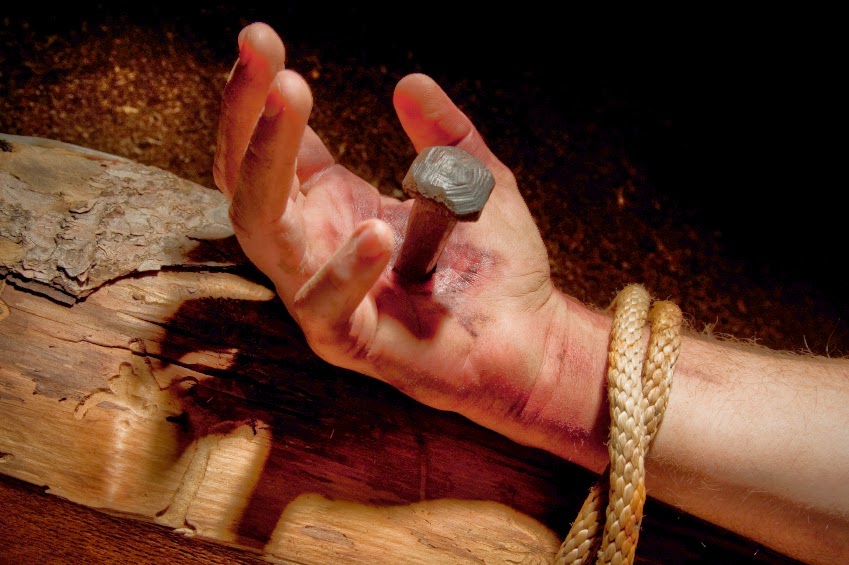
But his greatest act of love was yet to come. As he hung on the cross the next day, he stretched out his arms and said:  “I love you this much.” That day he willingly gave his life for all of us – every one of us.  No matter who we are – or – what we've done. He even loved his enemies, who he forgave and blessed that day as they executed him.

Can we do that? Love that much? 

Certainly the events we just witnessed at the Boston Marathon have challenged us to love and not hate.  What do you do with the pain in our hearts from the events like this bombing?  How to process these unholy sights in the streets of Boston?  Sights that are common in Syria and Afghanistan, Jerusalem and Gaza and all the other places on earth where violence is visited upon the innocent.

Jesus says we are called to love … in the same way … he loved.

We mus try to love those who no one seems  to care about … to love those … who are starving for our affection.
We must try to tell the truth – even when others may not want to hear it - about those things that are barriers to faith and God.

We must try to love others ... rather than judge them.
We do this by humbling ourselves as Jesus did and serve the people in our lives.
We must try to love even those who would do us harm.
If Jesus could forgive and love those who killed him, we can forgive – out of love – those in our lives we need to forgive. That night at the end of his three year mission, he shared with them – and with us – the most important thing he ever came to say:

Love one another … in the same way … I have loved you!

Sunday, March 23, 2014

Gospel - John 4:5-42 - The Woman at the Well

Can you hear how radically changed that whole community of Sychar was through this encounter between Jesus and a rather imperfect woman? Most Jewish men would have looked down on this lowly Samaritan woman, but Jesus treated this woman with dignity, and it changed a whole community.

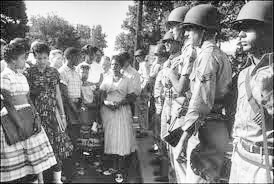
This story reminded me of an event that is seared in the minds of many in my generation;an event that not only changed a whole community but our whole country. In 1957 the federal government ordered Central High School in Little Rock, Arkansas to become racially integrated.  The image of armed shoulders escorting nine very dignified, stoic black girls and boys into school is something none of us who saw it will forget.

Melba Patillo was one of the nine Black students escorted to class by U.S. marshals. Whites lined the sidewalk and jeered as she went into school. In the course of that year Melba was spit upon, tripped and called names. What pained her most, however, was being ignored by the other students. She wrote a book about her experiences entitled: Warriors Don’t Cry.  
In it she writes: “All I wanted them to say was, ‘Hello, how are you? What a nice blouse.’ ” Melba recalls lying in bed at night filled with fear. But she rarely cried because her grandma kept telling her, “God’s warriors don’t cry.” One day she wrote in a diary:  I am growing up too fast.  I’m not ready to go back to Central and be a warrior. I just want to stay right here listening to the songs of Nat King Cole. The story of Melba Patillo highlights the whole problem of prejudice. And she represents the kind of change one person can make in a community.

Unfortunately prejudice is as old as the world.  And it was part of the world in which Jesus lived as well. Jews harbored a deep prejudice against the Samaritans. Jesus spoke out against it forcefully, in a variety of ways. He shocked his Jewish listeners by making a Samaritan the hero of one of his best-known parables: the parable of the Good Samaritan.  Many Jews were no doubt irritated when Jesus pointed out that ten lepers were healed one day, but the only one to return to give thanks was a Samaritan. And many Jews were no doubt shocked to learn that Jesus asked a Samaritan woman for a drink from a common cup Samaritans used. It was like a white man in the south in pre-civil-rights days asking a black woman for a drink from a common cup that blacks used.  Even the Samaritan woman was shocked, saying to Jesus:  “How can you, a Jew, ask me, a Samaritan woman, for a drink?” But Jesus did something even more dramatic to make a statement about the prejudice against the Samaritans of his time. He revealed to this lowly woman who he was, Jesus tells the woman that she has been married to five men and she was living with a man who wasn't her husband. He knows us through and through.  Shocked that he knew this, she responds: “Sir, I can see that you are a prophet.”  “I know that the Messiah is coming, the one called the Christ; when he comes, he will tell us everything.” Jesus said to her, “I am he.”

The woman left her water jar, went into the town, and exclaimed to the people there “Come meet Jesus!”  And they came, and they believed.  And – what did she tell them? He knew me.  He knew my whole messed up history, and he didn't judge me. He loved me, and offered me new life. That’s the “living water.”  It’s the unconditional love of Christ.  A love we all experience through our baptism.  New life, and a call to mission!

The Samaritan woman was the least likely person imaginable to become a missionary … to become an evangelist.  A woman, a Samaritan woman at that!  One who started out as an outcast – like Melba Patello – she became Jesus’ very first missionary to the non-Jewish world … amazing!

That Samaritan woman is all of us.

That’s the message in today’s Gospel for each one of us.  We can change our world, our community.  We are qualified.  We are good enough.  We are all sinners, and we too can respond to our encounter with the mercy of Christ - his unconditional love of us - the way the Samaritan woman did.  We can share with others the Good News.  That our God knows us, and loves us – as we are – and offers us new life!  The living water of Divine life.Being an evangelist isn't hard.  It’s just telling others what we've found; sharing our story.  

There are 67 million Catholics in the United States.  Only 24% come to Mass once a week regularly.  That means there are 50 million Catholics that are inactive in their faith.  Statistics show that the best missionaries to inactive Catholics are … friends … neighbors … or family members. Statistics also show that nearly two-thirds of all Catholics who became active again do so because a friend or relative invited them to return.

That is our challenge.  There lies an area of missionary work that every Catholic in the church can … and should … become involved.  We all know inactive Catholics!  If you truly want to make this Lent something special, make a loving invitation to someone you know to come to Mass with you one week.  You never know, your simple invitation might be the cause for them finding their way back to the Church.  

If Jesus can change a whole community through the witness of one humble woman,  and nine courageous black kids with a sense of mission can change an entire country, we can change our world too – our community – our family.

If you think you don’t have what it takes to be an evangelist, just read this Gospel again,  no one was less likely in the time of Christ for this call then a Samaritan woman who had been married five times and was living with a sixth man.

You are worthy! You are capable! And, you are called!   

Invite someone to Mass.

Tuesday, March 18, 2014

Gospel Reading - Luke Chapter 21 verses 5 to 19.

This story in Luke’s gospel comes near the end of Jesus’ life, the end of his work here on earth.  Jesus uses this moment to make sure his disciples understand what was coming, and what it means to be his follower, to be his disciple. He is not just talking to them; he is talking to us too. 

They have just been admiring the great Temple in Jerusalem. He tells them – As great as this building - this Temple - is all that you see here, he says, will be destroyed.  There will come a day when there will not be left a stone upon another stone, it will all be torn down. 

In a few days Jesus would be hanging on a cross, and their world would be turned upside down.  Jesus wanted to prepare them.  Everything they knew was about to change and it wasn't going to be easy for them. He said – a time is coming when you will be handed over for persecution, even by parents – brothers – relatives – and friends.  You need to be ready for the end.

When St. Luke wrote this story, sometime after the year 70 AD, the Romans had destroyed the Temple as prophesied by Jesus.  It was a time when St. Luke’s community was suffering the persecutions that Jesus predicted. So in today’s Gospel Luke was trying to encourage them by telling them this story.  He was saying – don't give up because God is always with us. God has a plan that leads to LIFE.

The signs Jesus gave that day for the end of time seem to always be with us. Wars and natural disasters seem to come and go in every generation.  Just think of the last few years.  We have had an earthquake in Haiti, a super storm Sandy in the east, the Tsunami in Japan, brush fires in Australia; and a Typhoon in the Philippines. In my lifetime there seems to have been a war, somewhere in the world, every year. The world seems to be at war nearly all the time. We have become so conditioned by the death and destruction of man-made and natural events that we ignore them as signs of the end of time, of the fragility of life.
 
The early Church lived each day as if Jesus might return … that day!

After the death of Jesus the apostles all lived as if the of the end of the world were coming immediately.  They lived as if each day might be their last because of Christ’s return, or being persecuted for their faith.
                  
Today here in San Diego, on a beautiful weekend, when we hear Jesus say in the scriptures that following him may cause people to persecute us that idea seems - well -crazy. This message doesn't seem for us, and so it has little or no impact on how we live our lives day-to-day. Even though in the United States we feel quite safe from persecution, perhaps the point that Jesus was making that day – for us – is that the standard by which we should be living, the measurement of our faith life should be weather we would be willing, if required, to face martyrdom. 

We are all being asked this morning:
Would you give your life for your faith?

We take our freedom for granted. Over the past few years thousands of Christians have lost their lives. Right now, as we sit here in this beautiful church, in many countries gathering for Mass is illegal. To people in those countries Mass is so important that they’ll risk their lives to go.  

Is Sunday Mass that important to us?
That is what Jesus is asking each of us … today.  How are you living your faith? Are you persevering – living a purposeful, unwavering, vibrant faith? Because today might be the day you meet Jesus – face to face. 

Our faith in Jesus our following him, our choosing to be his disciple, his follower is not meant to be a casual commitment; it is meant to be everything. It is meant to define us, and drive us, and be the foundation of the way we live our lives. And … it is also meant to bring meaning and joy to our lives too.  

Rachel Remen is a doctor who has been counseling people with chronic and terminal illness for more than twenty years. She is co-founder and medical director of the Commonweal Cancer Help Program. She tells a story about a women in her thirties who was told that Remen worked with the dying, and confronted her, telling her she resented all this talk about death as something meaningful. 

Then she recounted the story of her young husband’s death a number of years earlier.  He had been diagnosed with cancer and as therapy after therapy had failed he became bitter, lashing out at everyone, rebuffing anyone who tried to comfort him.  When he looked back at his young life he regretted the choices he had made. He died angry and withdrawn.  She ended her telling of this ordeal saying – “I do not want to die this way.”
Remen asked her – “So how do you need to live?” The woman looked puzzled. So Remen asked her again.  “How do you need to live to be sure that you do not die this way?” This time she got it. She looked past Remen for a moment, making eye contact with something intensely personal. Then she reached out and touched Remen’s hand and turned away into the crowd.  

Some months later, Remen receives a note from this woman.  She realized she was not living as authentically as she wanted.  There were many things left undone; many roads not taken.  She began to revise her life in the light of her death. In her case, life was still tested in the dying but in a reverse fashion. Contemplating her death started a process that lead to her rearranging her life.

That’s what Jesus is saying today …
He is saying – time is short – persevere, stay focused on what is truly important and really live - your life.

We should not be afraid that our life will end 
rather we should be afraid that it will never begin.  
Worry about tomorrow only steals the joy from today.

God’s greatest gift to us is life.

How we live it is our greatest gift to him.